How to Choose Home Fitness Equipment: A Complete Buyer's Guide for 2026
- Share
- Issue Time
- Aug 31,2026
Summary
It presents six practical steps for selecting suitable home fitness gear: clarify personal fitness goals, measure available room and storage space, learn different resistance systems, consider all family users, verify product quality & safety certifications, and share procurement tips for retailers/importers such as OEM/ODM, factory‑direct cooperation, sample testing and lead‑time information.
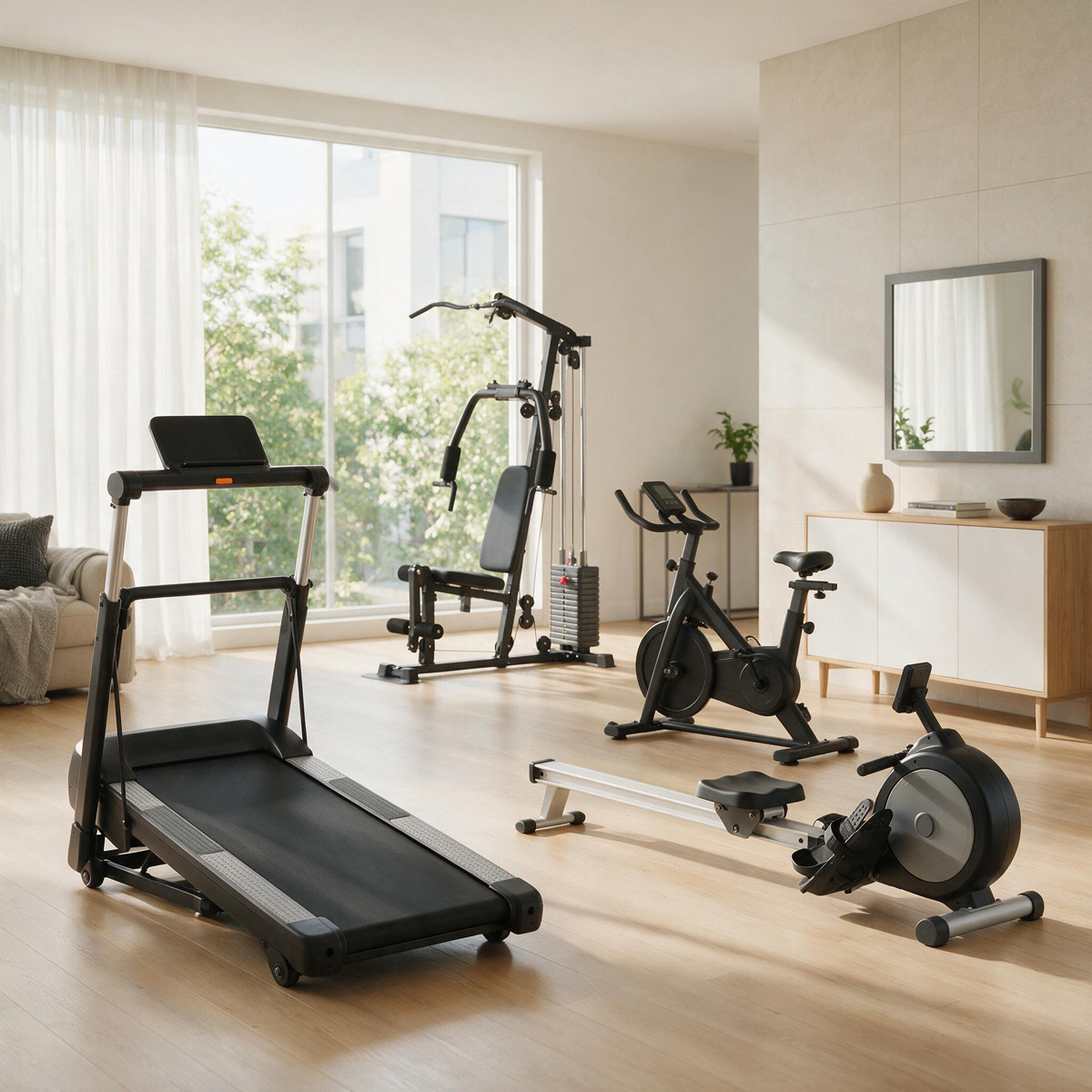
The home gym is no longer a luxury — it's a lifestyle. Whether you want to burn fat, build muscle, or simply stay active without commuting to a gym, home fitness equipment puts your workout on your own schedule. But with hundreds of machines on the market — treadmills, exercise bikes, rowers, ellipticals, multi gyms, and more — choosing the right one can feel overwhelming.
This guide walks you through six practical steps to help you pick equipment you'll actually use, enjoy, and keep for years.
Step 1: Start with Your Fitness Goals
Before you look at any machine, be honest about what you want to achieve. Every piece of equipment is built for a purpose, and matching the machine to your goal is the single biggest predictor of long-term success.
| Your goal | Best equipment |
| Fat loss & cardio endurance | Treadmills, exercise bikes, spinning bikes, rowers, ellipticals |
| Muscle & strength building | Multi gyms, power racks, weight benches, dumbbell sets, pulley stations |
| Full-body conditioning | Rowers, cross trainers, multi gyms |
Low-impact & joint-friendly training | Recumbent bikes, magnetic rowers, water rowers, ellipticals |
Space-constrained apartments | Foldable treadmills, foldable magnetic bikes, mini exercise bikes, steppers |
Pro tip: The best machine is the one you'll actually use. If you dread running, don't buy a treadmill because "everyone has one" — a bike or rower you enjoy will deliver far better results.
Step 2: Measure Your Space (and Your Storage)
Home fitness equipment must fit your room — and your life. Before ordering, measure both the workout area and any storage space (closet, balcony, under-bed). Look for these space-saving features:
•Foldable designs — foldable motorized treadmills, foldable magnetic bikes, and folding rowers collapse in seconds and roll away when not in use.
•Compact footprints — mini exercise bikes, steppers, and adjustable benches fit even the smallest corners.
•Upright storage — many folding treadmills and X-bikes store vertically, freeing up floor space entirely.
A machine that "fits" but can't be stored quickly will end up collecting dust.
Step 3: Understand Resistance Systems
The resistance system determines how the machine feels, how loud it is, and how much maintenance it needs. This is where most buyers get confused — here's the plain-English breakdown:
•Magnetic resistance — the gold standard for home use. Quiet, smooth, and nearly maintenance-free. Found on magnetic exercise bikes, magnetic rowers, and many ellipticals. Perfect for apartments and family homes.
•Belt drive — sealed belt systems are silent and grease-free, giving you a smooth, natural pedaling feel. Ideal for indoor bikes where quietness matters.
•Air resistance — the harder you pull, the more resistance you get. Great for intense, full-body cardio (air rowers, fan bikes), but noisier.
•Hydraulic resistance — compact and affordable, common on budget rowers and steppers.
•Water resistance — smooth and realistic, with a soothing water sound (water rowers).
•Manual vs. motorized — manual treadmills are belt-driven by your own stride (no power needed); motorized treadmills offer speed and incline programs for structured training.
For strength machines, the choice is between weight-stack machines (smooth, self-contained, great for home multi gyms) and plate-loaded / free-weight setups (power racks, benches) for maximum versatility.
Step 4: Match the Machine to the Person
A home gym is a family investment, so make sure the equipment works for everyone who will use it:
•Maximum user weight — check the rated capacity. Quality machines with welded steel frames support up to 300 lb (136 kg) or more.
•Adjustability — look for adjustable seats, handlebars, and resistance levels so multiple family members can train comfortably.
•Noise level — if you live in an apartment or train while others sleep, prioritize magnetic or belt-drive machines, which are whisper-quiet.
•Comfort — padded seats, ergonomic grips, and smooth pedal motion make the difference between a 10-minute session and a 40-minute one.
Step 5: Check Quality, Safety, and Certifications
Fitness equipment carries real safety responsibility — especially with heavy loads and moving parts. Always verify:
•International certifications: CE, RoHS, TÜV/GS, and SGS EN ISO 20957 are the key marks for fitness equipment sold in global markets.
•Social compliance: factories audited under BSCI demonstrate responsible manufacturing.
•Frame & build quality: welded steel construction, durable powder coating, and reinforced joints prevent wobble, squeaks, and premature failure.
•QC practices: reputable manufacturers sample-inspect each batch (e.g., 10% or more of products) and provide inspection reports.
•After-sales support: check warranty terms and whether the supplier responds quickly when you need help.
Buying from a certified manufacturer isn't a nice-to-have — it protects your safety and your investment.
Step 6: Buy Smart — Samples, Customization, and Working Directly with the Factory
If you're a retailer, importer, or brand owner, choosing a supplier matters as much as choosing a machine. Working directly with an experienced manufacturer gives you:
•OEM/ODM customization — your logo, your colors, your packaging, and instruction manuals in your local language.
•Factory-direct pricing & MOQ — better margins than buying through middlemen.
•Fast samples — test the product before committing to bulk orders.
•Reliable lead times — a strong supply chain delivers bulk orders within 15–30 days.
•Promotional support — professional photos and videos to help you sell faster.
A complete product range matters too: the ideal partner should offer both cardio (exercise bikes, treadmills, rowers, spinning bikes, recumbent bikes, ellipticals) and strength equipment (multi gyms, power racks, weight benches, pulley stations) — so you can build a full product line from one trusted source instead of juggling multiple suppliers.
Quick Reference: What to Buy First
Scenario | Recommended first purchase |
| Tight space, wants cardio | Foldable magnetic exercise bike or mini stepper |
| Wants fat loss, enjoys walking/running | Foldable motorized treadmill |
| Wants full-body, low-impact workout | Magnetic or water rower |
| Serious strength training at home | Power rack + weight bench + dumbbell set |
Whole-family versatility | Multi gym (weight stack) + exercise bike |
Recovery / seniors / rehab | Recumbent bike or recumbent-friendly rower |
Final Thoughts
Choosing home fitness equipment doesn't have to be complicated. Define your goal, measure your space, understand resistance types, and never compromise on safety certifications. And when you're ready to buy — whether it's one machine for your living room or a full container for your store — choose a manufacturer with the experience, certifications, and customization capability to back you up.
DEQING SISTER SPORTS CO., LTD. has been manufacturing home fitness equipment since 2010, exporting to more than 100 countries with over 200 product lines. Our factories hold BSCI audits, and our products are certified to CE, RoHS, TÜV/GS, and EN ISO 20957 standards. From foldable treadmills and silent spinning bikes to magnetic rowers and complete multi gyms, we offer factory-direct pricing, full OEM/ODM customization, and delivery within 15–30 days.
Ready to build your perfect home gym — or your next product line? Contact us today for samples and a quote.
•Email: zoe@sisterunion.com
•WhatsApp: +33 7 83 69 32 66