In-depth Analysis of Fitness Equipment Development Trends in 2026: Five Major Trends Reshaping the Industry Landscape from Smart Wearables to the Silver Economy
- Share
- Issue Time
- Jul 21,2026
Summary
The global fitness equipment market hits a brand-new inflection point in 2026, marked by deep integration of AI into training scenarios, senior citizens emerging as the fastest-growing consumer group, and the surging popularity of recovery and rehabilitation equipment. Drawing on the latest annual report from the American College of Sports Medicine (ACSM) and market statistics, this paper breaks down the most noteworthy trends and business opportunities in the fitness equipment industry for 2026
I. Market Overview: Structural Shifts Amid Steady Growth
The global fitness equipment market size is projected to reach approximately USD 38.38 billion in 2026, with a compound annual growth rate (CAGR) ranging from 3.9% to 7.6%. The U.S. market, valued at USD 5.5 to 6.2 billion, remains the world’s largest single national market.
Notably, market growth is no longer broad-based. The explosive growth witnessed during the pandemic has subsided, and the industry has entered a mature era of Hybrid Fitness, where home and commercial fitness scenarios are deeply integrated. Consumers now set higher standards for equipment intelligence, space efficiency and content ecosystems.
Import data shows that U.S. fitness equipment imports maintained a high volume above USD 8 billion from 2024 to 2025. China still accounts for 87% of global manufacturing output, while emerging manufacturing hubs such as Vietnam and India are expanding rapidly, diversifying supply chains across the sector.
II. Five Core Trends for 2026
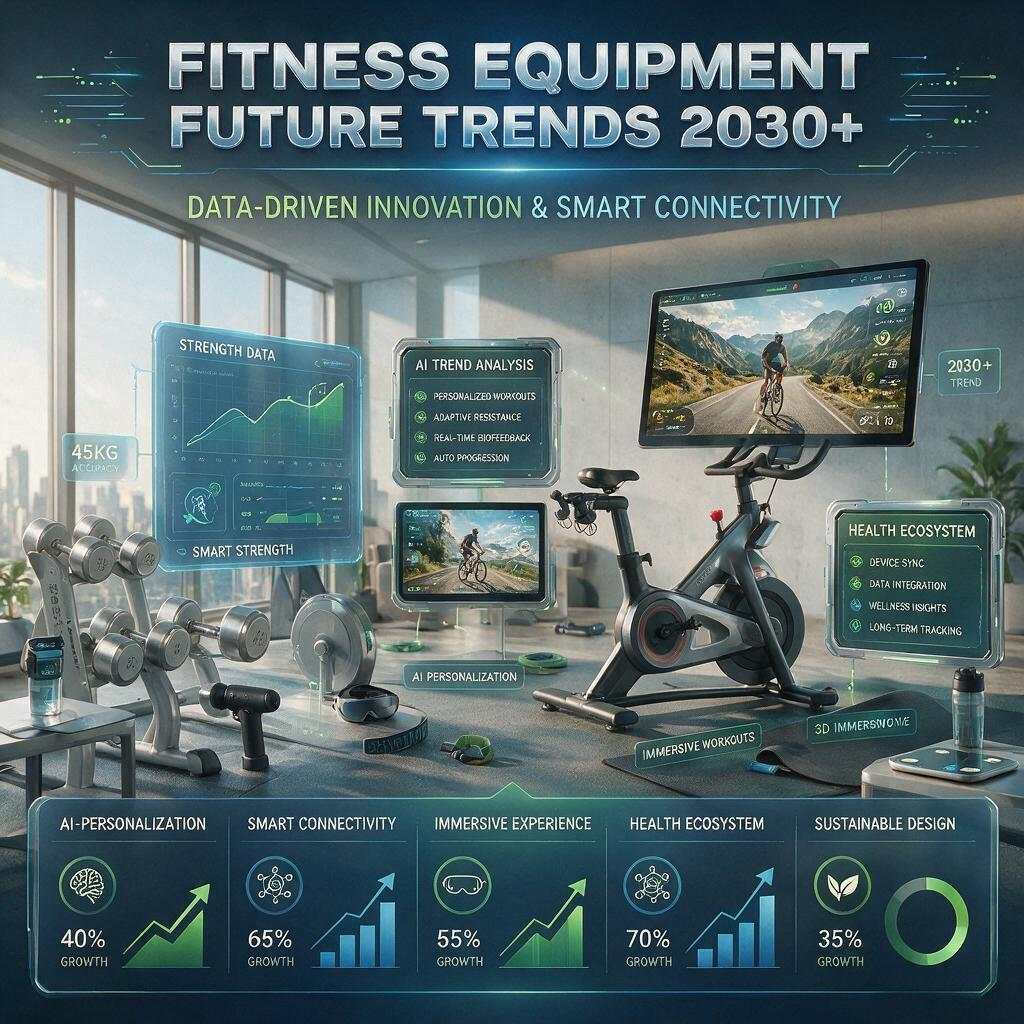
Trend 1: AI & Data-Driven Technology – The "Smart Brain" of Fitness Equipment
In ACSM’s 2026 Global Fitness Trends Report, wearable technology claims the top spot for consecutive years, while "data-driven training technology" enters the top ten for the first time.
This represents far more than simply syncing equipment to mobile apps to view metrics. Smart fitness equipment in 2026 achieves three major breakthroughs:
1. Real-time Dynamic Adjustment
Devices automatically adjust resistance, incline and other parameters based on real-time user data including heart rate and power output, delivering fully personalized training plans tailored to every individual. Brands including Technogym and Tonal have commercialized this technology.
2. Advanced AI Coaching Functions
Beyond merely displaying data, AI delivers proactive guidance: it analyzes movement posture, predicts injury risks and dynamically revises training regimens. The adoption of generative AI enables more natural interactive experiences.
3. Cross-scenario Data Integration
Data silos between smartwatches, stationary bikes, strength machines and sleep monitoring devices are eliminated, creating a complete digital health twin for each user.
Insights for Equipment Merchants
Basic fitness equipment without data collection and connectivity capabilities will face mounting competitive pressure. Integrating sensor modules and opening API interfaces have become the minimum entry requirement for product competitiveness, whether for treadmills or strength racks.
Trend 2: Boom in the Silver Economy – Blue-Ocean Opportunities for Age-Friendly Fitness Equipment
"Senior fitness programs" ranks second in ACSM’s 2026 trend report, climbing further from 2025. This is not a fleeting fad, but a long-term structural opportunity driven by demographic shifts.
Nerio Alessandri, Founder of Technogym, stated: "Robust scientific evidence confirms that regular physical activity – especially strength and functional training – is critical to preserving seniors’ self-care capacity, preventing functional decline and boosting cognitive resilience."
Senior fitness demands fall into four core categories with corresponding equipment solutions:
Training Focus | Core Needs | Matching Equipment Directions |
| Muscle Mass Retention | Prevent sarcopenia (age-related muscle loss) | Low-start resistance hydraulic/pneumatic resistance systems, seated training machines |
| Cardiopulmonary Health | Low-impact aerobic exercise | Recumbent bikes, elliptical trainers, aquatic fitness equipment |
| Balance & Mobility | Reduce fall risks | Balance boards, core stability trainers, gait training gear |
Cognitive-Motor Coordination | Coordinate body and mind | Reaction training equipment, interactive sensory fitness devices |
Insights for Equipment Merchants
Consumers aged 55 and above represent a vastly underestimated force in the fitness market. They demonstrate strong willingness to pay, high brand loyalty, and clear demands for safety and ease of use. Low-resistance hydraulic machines, seated cardio equipment and training stations equipped with handrails and anti-slip surfaces will be hot-selling categories from late 2026 through 2027.
Trend 3: From Draining Workouts to Smart Training – Explosive Growth of Recovery & Rehabilitation Equipment
The fastest-growing segment in the 2026 U.S. fitness equipment market is neither cardio nor strength gear, but recovery and biohacking tools.
This shift reflects a fundamental change in consumer mindsets: people no longer believe "hard training yields results", but rather "effective recovery delivers better fitness outcomes".
Key product categories include:
Vibration massage devices
Portable fascia guns and massage balls represented by Hyperice Hypersphere Go fit in the palm of a hand yet reach hard-to-access areas such as the back. TSA-approved for air travel, they cater to mobile professionals.
Thermal therapy devices
Cryotherapy chambers and localized cold therapy units are rapidly gaining traction in high-end gyms and resorts.
Pressure recovery systems
Pneumatic compression boots from brands like NormaTec facilitate lymphatic drainage and muscle repair post-workout, expanding from elite athlete use to mainstream fitness consumers.
Sleep optimization tools
Fitness extends far beyond gym sessions. Smart mattresses with sleep tracking and white noise machines redefine the concept of recovery.
Insights for Equipment Merchants
Recovery equipment carries high unit prices and ample brand premium potential, aligning perfectly with consumption upgrading. Retailers that only sell training gear should introduce recovery products to build one-stop shopping experiences covering both workout and recovery.
Insights for Equipment Merchants
Recovery equipment carries high unit prices and ample brand premium potential, aligning perfectly with consumption upgrading. Retailers that only sell training gear should introduce recovery products to build one-stop shopping experiences covering both workout and recovery.
Trend 4: Functional Training & Recreational Fitness – Prioritizing Practicality Over Aesthetics
"Functional fitness training" remains in the top ten of ACSM’s 2026 trend list, while "adult recreational sports clubs" debut for the first time. This signals fitness is evolving from solitary self-discipline to social group activity.
Two promising sub-sectors stand out:
Functional Fitness
No longer exclusive to professional CrossFit gyms, global mass competition series including HYROX and GYMRACE expand rapidly in 2026, spurring surging demand for functional training gear: sandbags, medicine balls, weight sleds, kettlebells and battle ropes. These products feature compact footprints, diverse specifications and moderate price points, ideal for bundled sales packages.
Social Fitness
Pickleball and other social sports gain global popularity. Matching portable nets, specialized rackets and lightweight court equipment emerge as new revenue streams for fitness equipment distributors.
Insights for Equipment Merchants
Create dedicated functional training zone bundles combining kettlebells, medicine balls, battle ropes, plyometric boxes and sandbags, paired with tiered training plans for beginners, intermediates and competitive athletes. This strategy lifts average order values and creates differentiated offerings.
Trend 5: Mental Health & Mind-Body Balance – The Psychological Dimension of Fitness
"Mental health exercise" enters the top ten for the first time (6th place) in ACSM’s 2026 report, while "balance, fluid movement and core strength" ranks 5th.
This reveals a profound post-pandemic shift: consumers pursue fitness not solely for weight loss or muscle gain, but equally for stress relief, mood improvement and enhanced quality of life. Corresponding equipment demands have evolved accordingly:
Yoga & Pilates equipment
Pilates reformers, yoga wheels and flexibility bands see sustained rising demand.
Meditation & breathing training aids
Smart meditation mats, breath trainers and heart rate variability (HRV) biofeedback devices.
Mind-body integrated cardio machines
Cardio equipment preloaded with immersive meditation or natural scenery cycling routes.
Insights for Equipment Merchants
Frame marketing messaging around stress reduction and emotional regulation. Product descriptions should highlight mental benefits such as relaxation and improved focus alongside calorie burn metrics. Yoga and Pilates gear serve as a natural entry point to capture female consumers.
III. Underlying Industry Fundamentals to Note
Hybrid Fitness Becomes the New Norm
In 2026, consumers no longer choose exclusively between gym memberships and home workouts. A typical routine may include CrossFit sessions on Mondays and Wednesdays, home smart cycling on Tuesdays, and community fitness center visits with elderly family members on weekends. Equipment design must balance compact storage for home use and commercial-grade durability, making foldable professional-grade gear a high-potential product category.
Sustainable & Eco-Friendly Materials Turn Standard
Environmental awareness increasingly shapes purchasing decisions. Fitness equipment built with recycled aluminum frames, biodegradable rubber flooring and bamboo fiber yoga mats have shifted from optional selling points to mandatory requirements for high-end buyers. ESG compliance standards in Europe and the U.S. force manufacturers to upgrade material systems.
Subscription Content Ecosystems Build Competitive Moats
While Peloton’s "hardware + subscription content" model faced stock volatility, its core logic has been validated. By 2026, more fitness equipment brands build paid subscription content ecosystems alongside physical products – including AI private coaching, live instructor classes and competitive challenges. Content ecosystems become the key differentiator between competing brands.
IV. Quick Overview of Category Opportunities for 2026
Sector | Representative Products | Competitive Landscape |
| Smart Cardio | AI treadmills, smart stationary bikes, elliptical trainers | Red ocean; competition hinges on brand strength and content ecosystems |
Age-Friendly Equipment | Hydraulic strength machines, recumbent bikes, balance trainers | Blue ocean; low supply chain barriers but limited brand recognition |
Recovery & Rehabilitation | Fascia guns, pneumatic compression boots, cold therapy devices | Rapid growth phase with expanding product lines |
Functional Training | Kettlebells, sandbags, sleds, battle ropes | Revival of classic products; bundled sales present major opportunities |
| Yoga & Pilates | Pilates reformers, yoga accessories | Steady growth with significant brand-building potential |
| Smart Wearables | Smartwatches, heart rate straps, fitness rings | Dominated by tech firms; cross-connectivity with fitness equipment creates new opportunities |
V. Conclusion: Three Critical Action Recommendations
For fitness equipment retailers and brand owners, three priority strategic directions emerge for 2026:
Double Down on "Smart Integration"
Adding sensor modules, data feedback and AI training recommendations to any product line delivers substantial premium pricing potential.
Penetrate the Senior Market
Fitness demands among consumers aged 55+ remain vastly underserved. Full age-friendly upgrades – from product design to marketing copy – will serve as the industry’s primary growth engine over the next three years.
Build Combined "Training + Recovery" Packages
Move beyond standalone workout equipment sales. Bundling recovery products into packages boosts average order value and establishes a professional brand image.
The fitness equipment industry is undergoing a full transformation from manufacturing-focused "metal goods sales" to experience-driven service provision. Stakeholders that swiftly embrace this shift will secure a competitive edge in 2026 and over the next five years.